PRODUCT 02 / NON-FERROUS METALS
Copper from Iran
A Strategic Metal for Modern Industry
Discover copper-bearing resources, ore types, extraction and processing routes, industrial applications, and the role of Iran’s copper mining sector in regional and international markets.
01 / PRODUCT OVERVIEW
What Is Copper?
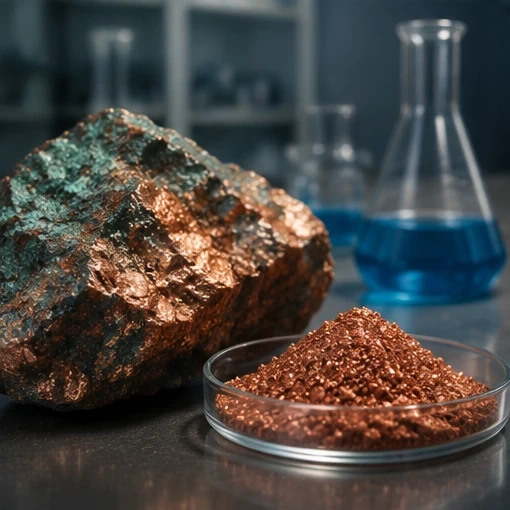
Copper (Cu) is a naturally occurring metal known for its excellent electrical and thermal conductivity, ductility, malleability and resistance to corrosion. These properties make it one of the most important industrial metals in modern economies.
In nature, copper is commonly found in mineral compounds rather than as pure metal. Copper-bearing ores are mined and processed to produce concentrates and, through further refining, high-purity copper for manufacturing and industrial use.
02 / COPPER PRODUCT FORMS
From Copper-Bearing Ore to Refined Metal
Copper moves through several commercial and industrial forms as it is mined, concentrated, smelted and refined. The exact product offered for a transaction must be confirmed against current availability.
Copper Ore
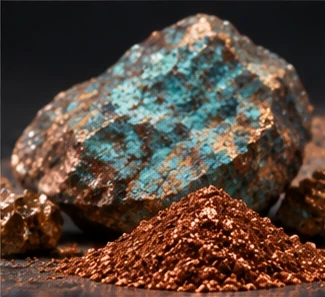
Run-of-mine or processed copper-bearing rock, with mineralogy and copper content varying by deposit and ore zone.
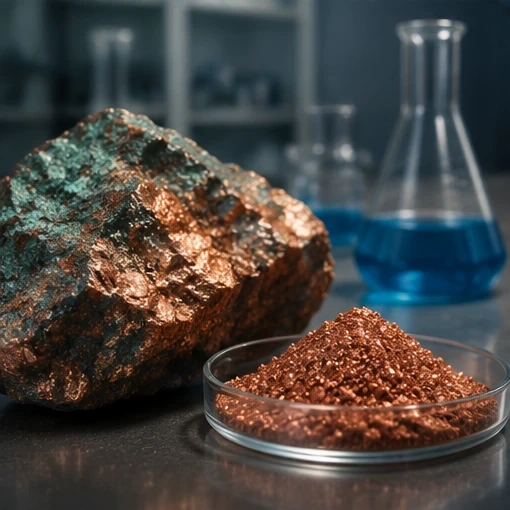
Copper Concentrate
An enriched material produced by separating copper minerals from much of the surrounding waste rock, commonly by flotation for sulfide ores.
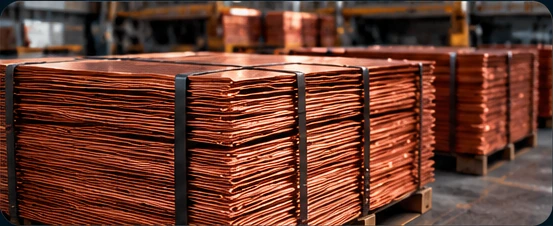
Copper Cathode
High-purity refined copper produced through electrorefining or electrowinning, used as feedstock for downstream copper manufacturing.
03 / COPPER-BEARING MINERALS
Common Copper Ore Minerals
Copper occurs in a range of sulfide, oxide and carbonate minerals. The mineral composition of a deposit influences the appropriate processing route and the resulting product.
Chalcopyrite
A major copper-bearing sulfide mineral and an important source of copper in many porphyry deposits.
Chalcocite
A copper-rich sulfide mineral that may occur in enriched zones of copper deposits.
Bornite
A copper-iron sulfide mineral often recognized by its iridescent tarnish and multicolored surface.
Malachite
A green copper carbonate hydroxide mineral associated with oxidized portions of copper deposits.
Azurite
A deep-blue copper carbonate hydroxide mineral commonly found with malachite in oxidized zones.
Cuprite
A copper oxide mineral that may occur in the oxidized zones of copper-bearing deposits.
Mineral formulas are provided as general mineralogical references. Actual ore mineralogy and grade must be determined through representative sampling and laboratory analysis.
04 / EXTRACTION & PROCESSING
Two Main Routes from Copper Ore to Metal
Mining and processing methods depend on deposit depth, mineralogy, grade and site-specific technical and economic conditions.
Open-Pit Mining
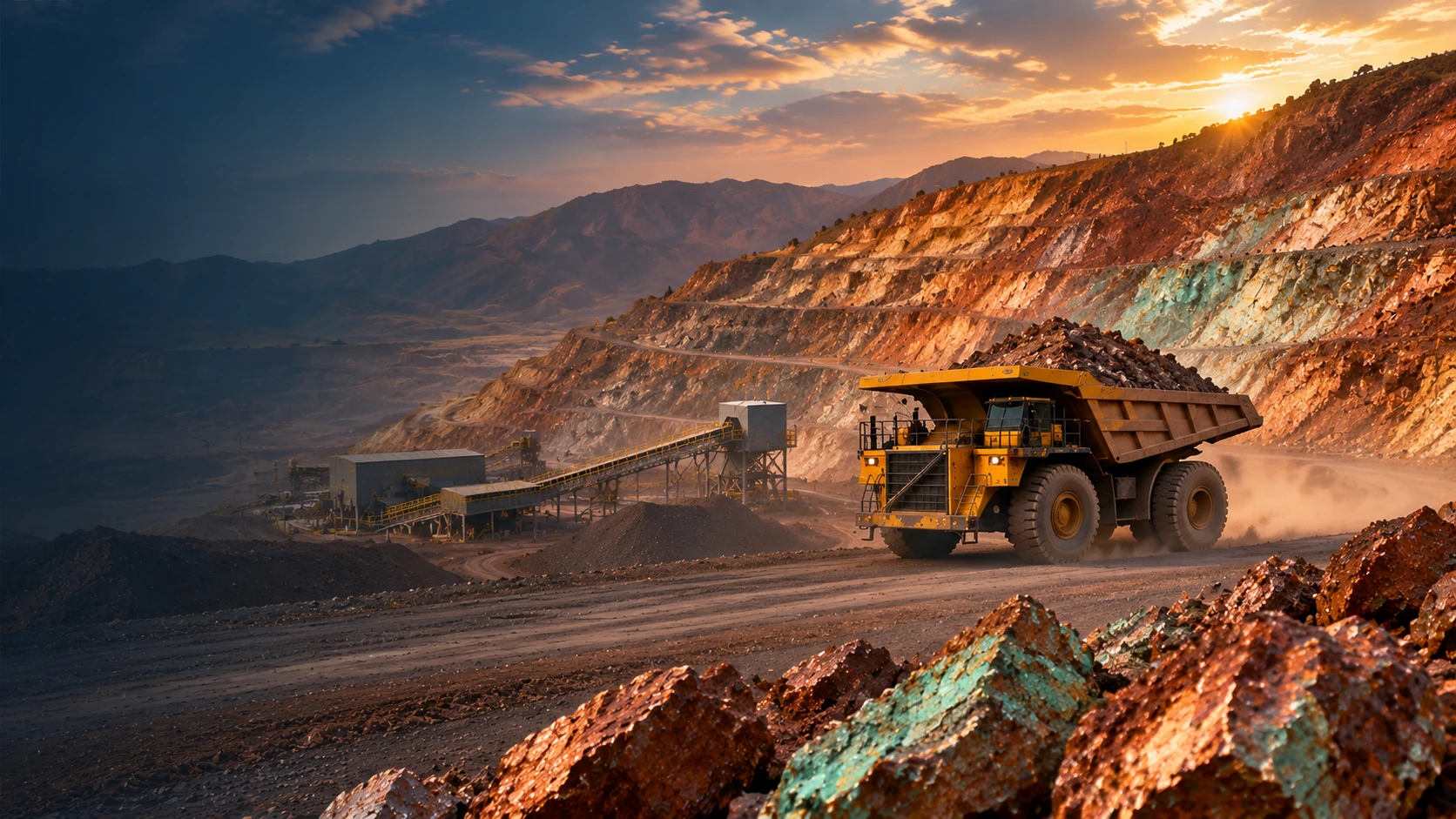
Used for deposits that can be economically accessed from the surface. Overburden and ore are removed in successive benches, and copper-bearing material is transported for processing.
Underground Mining
Used when ore bodies extend deeper below the surface. Access tunnels, shafts and underground stopes are developed to extract copper-bearing material.
Sulfide Ore / Pyrometallurgy
A common route for many copper sulfide ores.
Oxide Ore / Hydrometallurgy
A common route for many oxidized copper ores and selected low-grade materials.
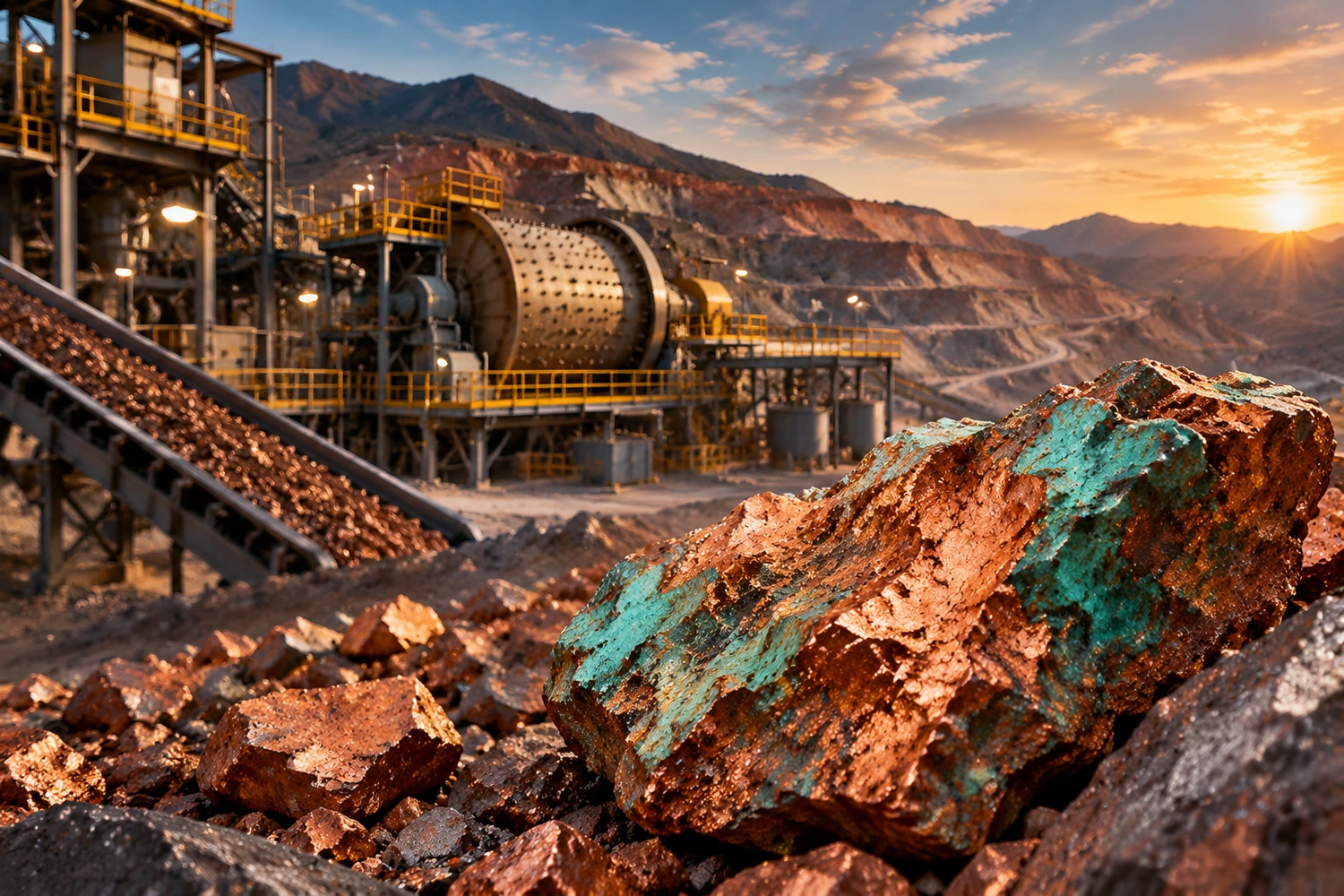
The routes above are general industry processes. Not every mine or copper product uses every stage, and the applicable flowsheet depends on the mineral deposit and processing plant.
05 / INDUSTRIAL APPLICATIONS
Where Is Copper Used?
Its conductivity, workability and durability make copper an essential input across a broad range of industries.
Electrical & Electronics
Power cables, wiring, motors, transformers, circuit components and electrical connectors rely on copper’s conductivity.
Wiring · Motors · ElectronicsConstruction & Infrastructure
Copper is used in building wiring, plumbing, roofing, heating and cooling systems, and other building services.
Buildings · Pipes · HVACAutomotive & Transportation
Vehicles and transport systems use copper in wiring harnesses, motors, radiators, connectors and electrical systems.
Vehicles · Rail · MarineMachinery & Alloys
Copper is used in industrial equipment and in alloys such as brass and bronze for components and machinery.
Brass · Bronze · EquipmentRenewable Energy
Copper supports electrical systems in solar and wind installations, power conversion equipment and grid connections.
Solar · Wind · Power gridsAgriculture & Chemical Uses
Selected copper compounds are used in agricultural products and in certain chemical and industrial applications.
Copper compounds · Chemicals06 / IRAN’S COPPER RESOURCES
Major Copper Mining Regions in Iran
Iran has an established copper mining and processing sector. The legacy IRMinEX article highlights the country’s copper resources and export potential. More recent USGS reporting identifies major operating complexes in Kerman and East Azerbaijan.
These are recognized mining and processing locations, not a statement that IRMinEX owns or operates the mines.
REGIONAL & GLOBAL MARKETS
Connecting Mineral Resources with Industrial Demand
The original IRMinEX article identifies opportunities from rising demand in electronics and renewable energy, improved extraction and processing technology, and the expansion of export markets. Actual export destinations, product availability and applicable trade requirements should be confirmed for each transaction.
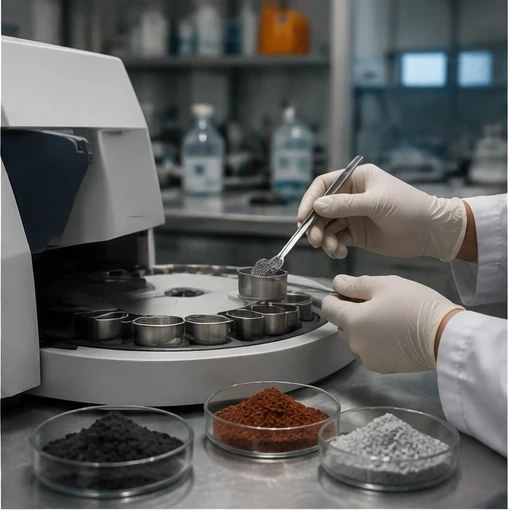
07 / QUALITY & PRODUCT DOCUMENTATION
Product Quality Starts with Verified Analysis
Copper ore and concentrate specifications vary by mine, deposit, mineralogy and processing method. A reliable commercial assessment therefore requires representative sampling and a current laboratory assay.
08 / STRATEGIC & ECONOMIC IMPORTANCE
Copper and the Industries of the Future
The role of copper extends beyond traditional metal production, connecting mining to electrification, industrial manufacturing and energy infrastructure.
Power Networks & Electrical Systems
Electricity networks, motors, transformers and electrical equipment depend on conductive materials, including copper.
Manufacturing & Electronics
Copper is used across electronic components, industrial machinery, vehicles and a wide range of manufactured goods.
Renewables & Grid Development
Solar, wind, energy storage and grid expansion create important industrial applications for copper products.
COPPER / FAQ
Frequently Asked Questions
Essential information about copper resources, mineral types, processing and industrial uses.
What are the main types of copper ore?
Copper occurs in sulfide minerals such as chalcopyrite, chalcocite and bornite, and in oxide or carbonate minerals such as cuprite, malachite and azurite.
What is the difference between copper ore and copper concentrate?
Copper ore is the mined copper-bearing material. Concentrate is an enriched product produced by separating valuable copper minerals from much of the surrounding waste rock.
How is copper extracted from sulfide ores?
A common route includes crushing and grinding, froth flotation to produce concentrate, smelting and converting, followed by refining to produce high-purity copper.
How are oxide copper ores processed?
Many oxide ores are treated by hydrometallurgical methods. A common route uses leaching, solvent extraction and electrowinning (SX-EW).
Where are Iran’s major copper mining complexes?
Major complexes include Sarcheshmeh and Meiduk in Kerman Province and Sungun in East Azerbaijan Province.
Does IRMinEX publish a fixed copper grade or price?
The legacy article does not specify a current commercial grade, price or guaranteed quantity. Request the applicable product details and lot-specific assay for each enquiry.
IRMINEX / COPPER ENQUIRY
Discuss Your Copper Supply Requirements
Contact IRMinEX to request product information and discuss copper ore or concentrate requirements, technical documentation and export arrangements.